Tom's Guide has named the Midnight Luxe its best mattress for side sleepers for two years running, thanks to a plush pillow top that cushions hips and shoulders and reinforced coils that support the lower back. It is also comfortable for back sleepers.
Pros
Cradling comfort for hips and shoulders
Targeted lumbar support
Edges stay sturdy despite the pillow top
Cooling upgrades available
Cons
The most expensive mattress on Tom's Guide's list
Some bounce and can feel hard to move around on
Hot sleepers need the cooling cover
Mid-pack motion isolation
Skip it if: You want the lowest price or a bed that is easy to roll around on
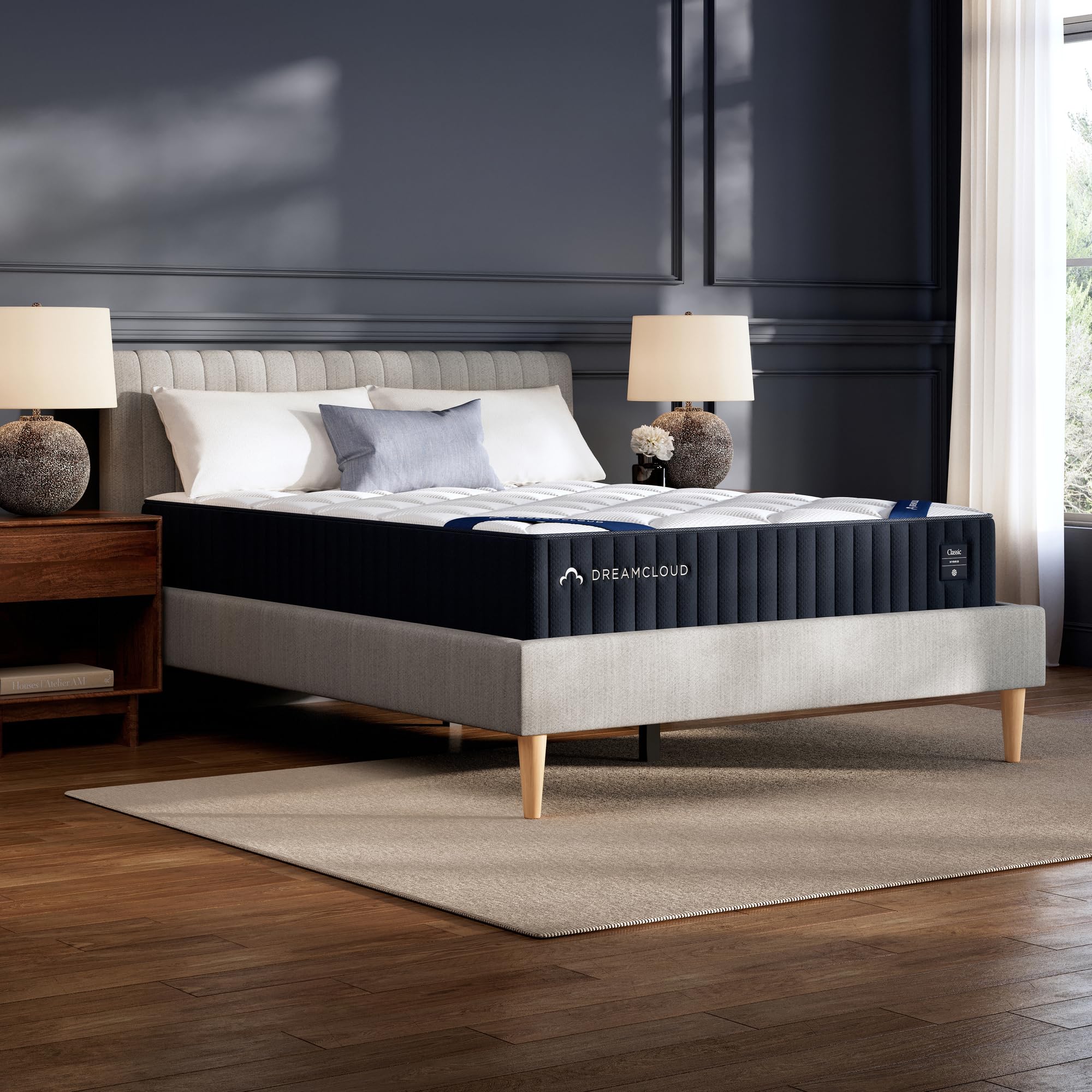
Tom's Guide and AARP both name the DreamCloud Classic Hybrid their best value pick. Tom's Guide says it costs well over $1,000 less than luxury rivals while scoring only a little lower, and calls it the best mattress under $1,000.
Pros
Luxury-style comfort at a much lower price
Strong, reinforced edges
Easy to move on
Long trial and lifetime warranty
Cons
Weak for stomach sleepers (both outlets)
You may feel a partner's movement
Very hot sleepers may want something cooler
The outlets disagree on firmness: Tom's Guide says medium, AARP says firm
Skip it if: You sleep on your stomach or run very hot
🛋️
#3 · Best memory foam
Nectar Premier Memory Foam
★★★★★4(332)
Side and back sleepers and couples who want a cushy foam bed
Tom's Guide names the Nectar Premier its best memory foam mattress, delivering the deep, cushioning hug of a much pricier bed with very little motion transfer. AARP picked it as best for back pain, calling its pressure relief and spinal alignment impressive and its motion isolation outstanding.
Pros
Classic contouring foam feel
Excellent motion isolation for couples
Solid edge support for foam
Under $950 for a queen per Tom's Guide
Cons
Too soft for stomach sleepers (Tom's Guide)
Slow response can make it harder to change position
Only average cooling per AARP
650 lb weight limit
Skip it if: You sleep on your stomach or prefer a bouncy, springy feel
How to choose
Match firmness to how you sleep. AARP suggests soft to medium-firm for side sleepers, medium to medium-firm for back sleepers, and medium-firm to firm for stomach sleepers.
Always buy with a long trial. Tom's Guide says your body needs about 30 days to adjust, so get at least a 60-night trial; all of its top picks offer 100 nights or more.
Hybrids bounce, foam isolates. Both outlets find pocketed-coil hybrids easier to move on, while memory foam is better at limiting motion between partners.
Look at edges if you sit or share. Strong edges give you the full surface and a steady spot to push off from, which matters for couples and anyone with mobility issues (Tom's Guide).
FAQ
Hybrid or memory foam?
Hybrids add coils for bounce and airflow and are easier to move on; memory foam contours and isolates motion better but can trap heat (AARP).
What is AARP's top pick?
AARP ranked the Nectar Luxe Hybrid best overall, praising its motion isolation, pressure relief and cooling, though it noted below-average edge support.
What is the cheapest good option?
Tom's Guide's best cheap pick is the Siena Signature, a firm 10-inch foam bed that it says costs under $300 for a queen but is too stiff for most side sleepers.
Picks come from Tom's Guide (lab-tested over 140 mattresses; guide updated May 22, 2026) and AARP Smart Picks (50+ beds lab-tested; updated Sept 21, 2026). The Helix Midnight Luxe is also backed by Fortune's and the NCOA's best-mattress lists. Assumptions: Prices change constantly and brands run permanent sales, so we quote only what the sources show and label it. The outlets sometimes disagree (for example on the DreamCloud's firmness), and we flag those. We did not use AARP's top pick, the Nectar Luxe Hybrid, as a main entry because Tom's Guide did not test it.